
What you get from an oil pump development project
Clear deliverables at every stage, from concept to validated prototypes and production-ready transfer.


A structured workflow from first concept to series readiness, with defined inputs and deliverables at each step.
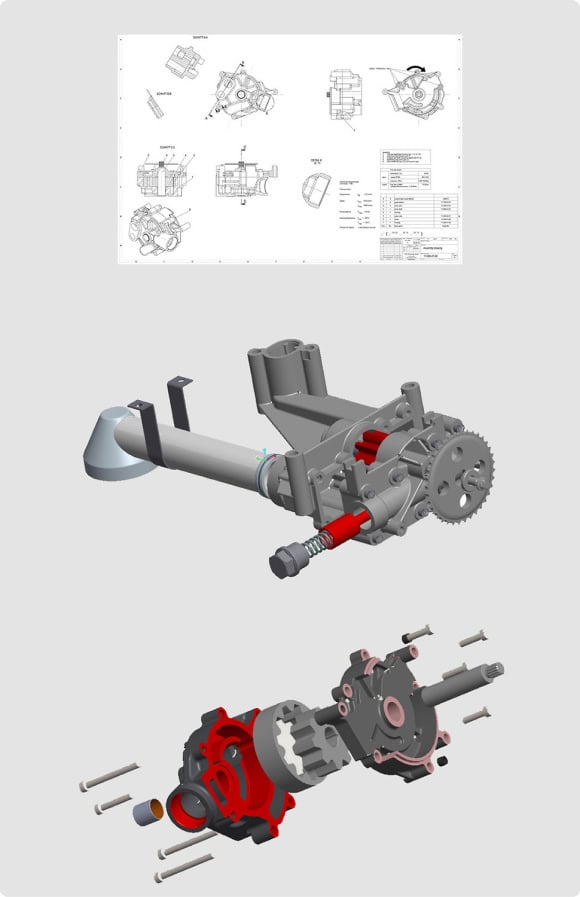
Requirements
Kick-off & application review
Requirement specification + application targets
Concept
System layout & gear set design
3D design + initial drawings
Simulation
Hydraulic calculations & CFD
Hydraulic performance data + simulation results
Prototyping
Prototype manufacturing
Functional prototypes for test bench validation
Validation
Prototype test rig optimization
Validated pump system ready for production preparation
Series
Ramp-up with production partners
Series-ready production setup with established partners
Engineering objectives we optimize for
When standard designs reach their limits, we develop a custom oil pump solution tailored to your specific requirements, optimizing pressure control, pulsation, NVH, and performance within tight packaging constraints.


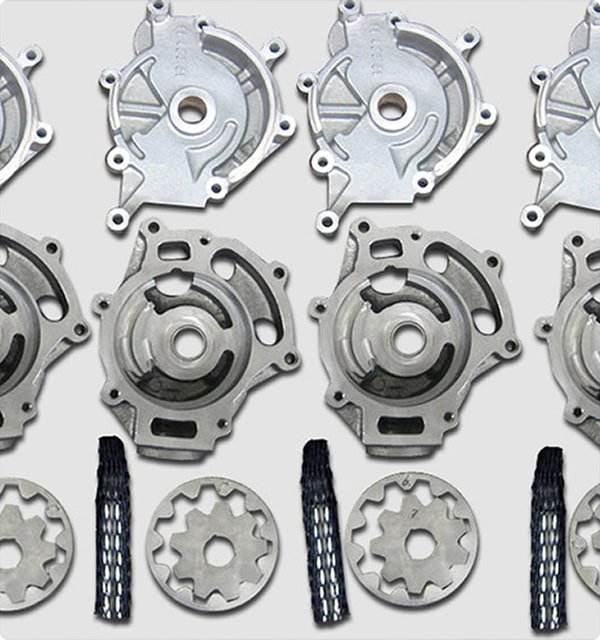
Fast prototypes with documented results
Conventional oil pump prototypes are typically available within 3–4 months after design freeze. Every prototype is optimized on our test rig for low power consumption, low pressure pulsation, and low noise behavior—100% tested with full test reports.


Series Readiness
We bridge the gap between engineering and mass production.


Ready to kick-off? Here is what we need
FAQs
Quick answers to common questions about oil pump custom development, timelines, validation, and how we support series ramp-up through production partners.
TPV should be involved before the pump envelope, drive interface, suction path, and oil circuit layout are frozen. Early involvement makes it easier to optimize flow, pressure behavior, NVH, packaging, and manufacturability before expensive design constraints are locked.
Useful inputs include flow rate, pressure targets, RPM range, oil type, viscosity range, temperature window, available packaging space, drive concept, mounting interfaces, NVH targets, pulsation limits, prototype timing, and planned SOP or series ramp-up.
Yes. TPV can evaluate an existing pump design, housing, gear set, suction path, leakage gaps, pressure behavior, and NVH performance to identify realistic improvement potential without necessarily redesigning the full system.
After design freeze, functional prototypes are typically available within 3–4 months, depending on complexity, interfaces, testing scope, and required manufacturing preparation.
Typical validation includes flow delivery, pressure stability, leakage, power consumption, pressure pulsation, relief valve behavior, NVH behavior, temperature influence, and durability-relevant operating points. Results are documented in test reports.
TPV focuses on engineering, development, validation, and production preparation. Series production can be supported through established production partners, depending on the required application, volume, region, and manufacturing setup.