Skip to content
Custom-developed for your application

Oil Pump Systems

Custom development for high-performance engine and transmission applications. From concept to validated prototypes and worldwide series ramp-up through production partners.

> 200M

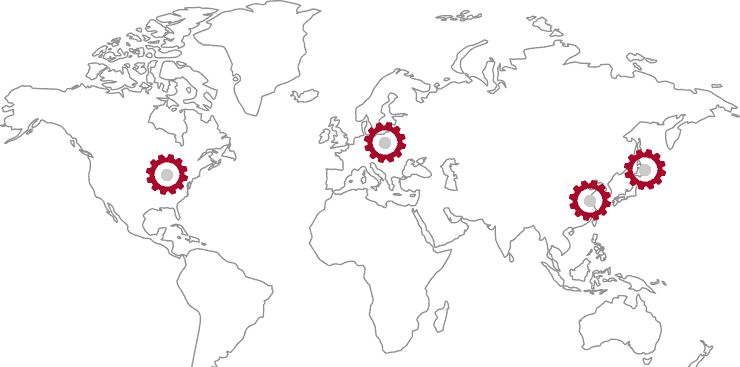
Oil pumps produced worldwide

oil pumps produced worldwide
Choose your system type

Explore oil pump system architectures

Select your application area to see typical requirements and custom engineering solutions.
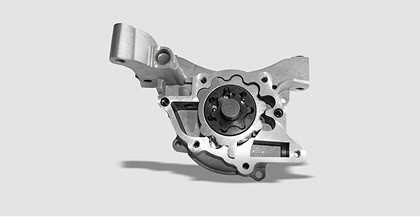
engine-lubrication

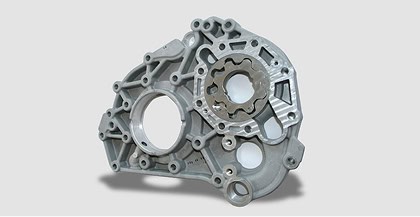
Engine Lubrication

Custom oil pump concepts for modern engine lubrication requirements.

  • Optimized for low power consumption and CO₂ targets
  • Designed for packaging constraints and crankshaft integration
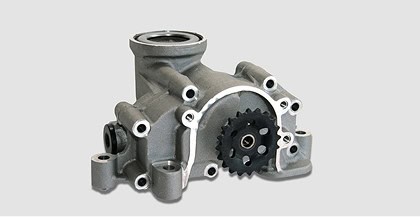
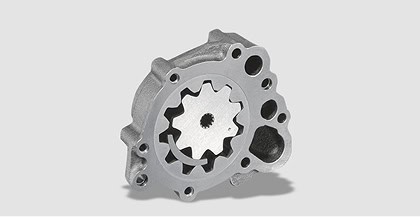
Conventional Engine Oil Pumps

Conventional Oil Pumps

Robust pump architectures with TPV gear technology advantages.

  • Higher displacement in compact designs (Duocentric-IC)
  • Proven efficiency and durability for series applications
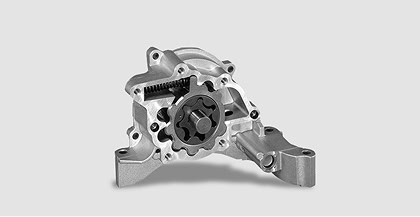
Regulated-Variable-Flow-Oil-Pumps

Regulated / Variable Flow

Variable displacement solutions for map-controlled efficiency.

  • Reduced parasitic losses across the duty cycle
  • Stable pressure control under dynamic operating conditions
Transmission (AT, DCT, CVT)

Transmission (AT, DCT, CVT)

Oil pump systems engineered for low noise and stable supply.

  • Low pulsation and NVH-critical performance in modern drivetrains
  • Tailored concepts for pressure, cooling, and flow demands
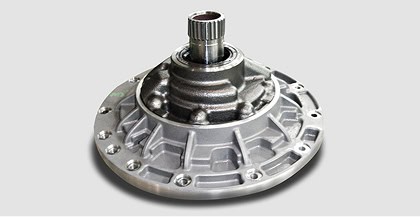
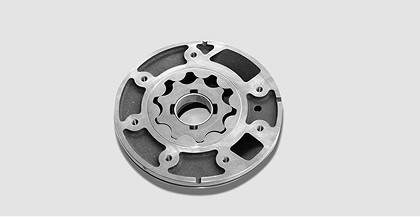
Automatic-Transmission-Pumps

Automatic Transmission (A/T)

Proven Trochocentric gearing for torque-converter transmissions.

  • Low noise and pulsation emissions at operating speed
  • Reliable hydraulic supply for shifting and lubrication circuits
Double-Clutch-Transmission-Pumps

Double Clutch Transmission (DCT)

Fast pressure build-up for high-demand clutch actuation and cooling.

  • NVH-focused design for sensitive transmission architectures
  • Stable pressure delivery across rapid transients
CVT-Oil-Pumps

Continuously Variable Transmission (CVT)

High-pressure pump concepts for CVT operating requirements.

  • Stable high-pressure supply across the operating range
  • Optimized efficiency under high load conditions
Off-Highway-Equipment-Oil-Pumps

Off-Highway Equipment

Rugged oil pump systems for heavy-duty operating environments.

  • Rugged oil pump systems for heavy-duty operating environments.
  • Stable performance under harsh duty cycles and temperatures
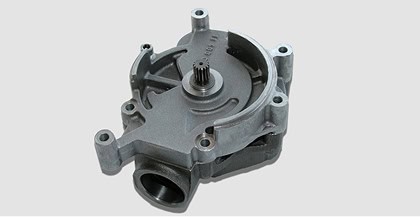
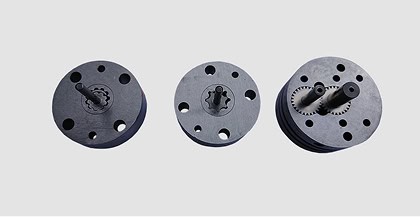
Electric-Driven-Oil-Pumps

Electric Driven Oil Pumps

Stand-alone auxiliary pumps for independent flow requirements.

  • Decoupled from engine speed for flexible control
  • Suitable for cooling and lubrication in electrified architectures
Engineering Challenges

Engineering solutions for common oil pump challenges

When standard designs reach their limits, we develop a custom oil pump solution tailored to your specific requirements, optimizing pressure control, pulsation, NVH, and performance within tight packaging constraints.

Low Noise / NVH Targets

Reduce airborne noise and structure-borne vibration through optimized gearing and system design.

Low Pulsation at High RPM

Minimize pressure pulsation and improve system stability across the operating range.

More Flow in the Same Package

Increase displacement and performance without changing the available installation space.

Stable Relief Valve Behavior

Eliminate oscillation and improve pressure regulation under dynamic conditions.

Custom engineering, proven at scale
Why engineers choose TPV

Designed for efficiency, low NVH, and low pulsation

We don’t offer off-the-shelf pumps. We engineer custom oil pump systems that meet your targets for efficiency, noise, pulsation, and installation space, backed by proven TPV technology.

  • Custom gear set dimensions engineered for your application
  • Proven TPV gear technology across engine and transmission systems
  • Low noise and low pressure pulsation for NVH-critical architectures
  • Variable flow solutions for reduced losses and better efficiency
  • Built for series readiness through production partners and documentation
How it works

From requirements to validated prototypes

A clear workflow tailored to your application, covering concept development, simulation, prototyping, validation testing, and series ramp-up with production partners.
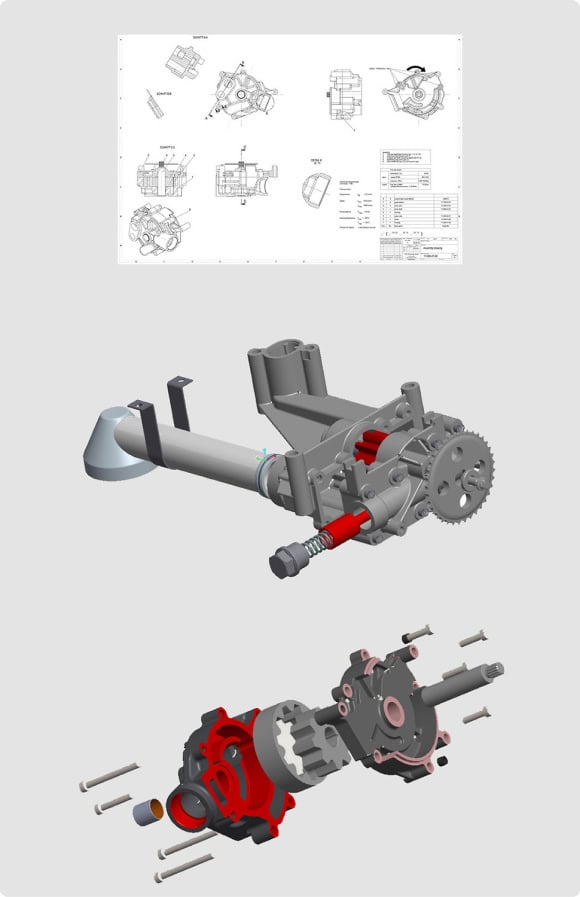
development process
1

Requirements

Kick-off & application review

Output:

Requirement specification + application targets

2

Concept

System layout & gear set design

Output:

3D design + initial drawings

3

Simulation

Hydraulic calculations & CFD

Output:

Hydraulic performance data + simulation results

4

Prototyping

Prototype manufacturing

Output:

Functional prototypes for test bench validation

5

Validation

Prototype test rig optimization

Output:

Validated pump system ready for production preparation

Series

Ramp-up with production partners

Output:

Series-ready production setup with established partners

FAQs

Quick answers to common questions about oil pump custom development, timelines, validation, and how we support series ramp-up through production partners.

As early as possible. The biggest impact is achieved during layout and concept definition, before packaging, shaft position, pressure targets and housing interfaces are fixed. TPV can also support later optimization projects, but early involvement gives more room for efficiency, integration and cost improvements.

Yes. TPV can work with existing installation spaces, shaft positions and interface constraints. In these cases, the focus is on finding a technically feasible pump concept that improves hydraulic performance, packaging fit, durability or efficiency within the given limits.

TPV optimizes the pump system around the actual lubrication demand. This includes gear set geometry, flow behavior, pressure regulation, internal leakage, friction losses and pulsation behavior. The goal is reliable oil supply without unnecessary overdelivery.

Yes. TPV has long-term experience with engine and transmission oil pump systems. The development approach depends on the application: lubrication demand, oil temperature, pressure range, speed profile, packaging space and durability requirements are evaluated individually.

Typical input includes target application, installation space, drive concept, shaft position, speed range, pressure and flow requirements, oil data, temperature range, duty cycle, expected lifetime and available interface geometry. If not all data is available, TPV can help define the missing parameters.

TPV supports the full path from concept and layout to simulation, prototype coordination, test rig validation and preparation for series production. For manufacturing, TPV works with established production partners.

Back To Top