Skip to content
Back to Overview

Double Clutch Transmission Oil Pumps

Custom-engineered oil pump systems for double clutch transmissions. Designed for rapid pressure build-up, stable clutch actuation, efficient cooling flow, and reliable lubrication under highly dynamic operating conditions.

Double Clutch Transmission

Rapid Pressure Build-Up

Fast hydraulic response for clutch control

Clutch Cooling Flow

Oil delivery for thermal load management

Low Pulsation

Stable delivery during fast transients

DCT-Specific Design

Adapted to wet and hybrid DCT systems

Typical applications for DCT oil pumps

Where TPV engineering supports fast hydraulic response, clutch cooling, lubrication, and pressure stability in double clutch transmission systems.

Clutch Actuation Supply

Hydraulic oil supply for precise clutch control, rapid pressure response, and stable actuation under dynamic shift conditions.

Clutch Cooling & Lubrication

Dedicated oil flow for wet clutch cooling, gear lubrication, bearing supply, and temperature-critical transmission areas.

Hybrid DCT Architectures

Oil pump concepts for DCT systems with start-stop, hybrid operation, compact packaging, and changing lubrication demand.

DCT System Integration

We adapt pump architecture, gear set, housing, and hydraulic interfaces to the DCT layout, clutch strategy, cooling demand, and available installation space.

Clutch Circuit Integration

Pump concepts developed around clutch actuation, cooling oil demand, lubrication paths, pressure response, and hydraulic control requirements.

Compact DCT Housing Integration

Integrated into tight DCT packages with attention to suction conditions, drive interface, mounting position, oil routing, and thermal load paths.

Why choose Double Clutch Transmission Oil Pumps?

Double clutch transmission oil pumps must deliver fast hydraulic response, stable clutch control, reliable cooling flow, and low pulsation within compact drivetrain packages.

Fast Hydraulic Response

Rapid pressure build-up and stable delivery for clutch actuation, gear changes, and transient operating conditions.

Cooling Flow Reliability

Oil flow concepts engineered for wet clutch cooling, lubrication demand, and thermal stability under high load.

DCT-Specific Packaging

Pump systems adapted to compact DCT housing, suction path, drive interface, and hydraulic circuit constraints.

Core Technology

Duocentric-IC Gearing

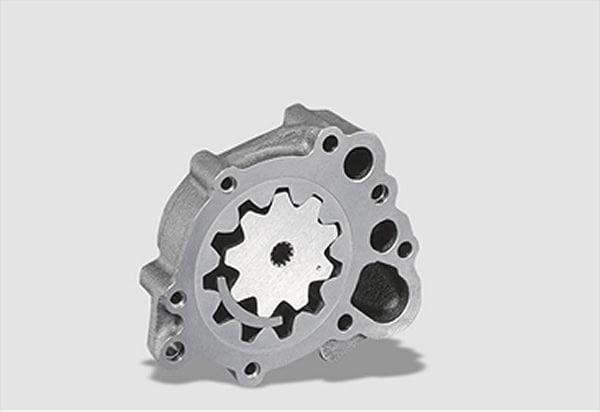
Trochocentric-developed gearing for double clutch transmission oil pump systems. Designed to support low pulsation, high volumetric efficiency, and stable hydraulic delivery during fast clutch and gearshift events.

Trochocentric Developed

Optimized clearances & Roll-off

Standard Gerotor

Higher Pulsation & Wear

  • Low pressure pulsation for fast DCT hydraulic control
  • Reduced leakage gaps for improved volumetric efficiency
  • Smoother tooth engagement for lower NVH emission
  • Suitable for wet clutch, lubrication, and cooling pump concepts
Deep Dive: Trochocentric Tech
Duocentric-IC Technology

Key Performance Targets for DCT Oil Pumps

Low Noise / NVH Targets

Reduce pump-related noise, gear excitation, and structure-borne vibration in acoustically sensitive DCT powertrains.

Fast Pressure Build-Up

Maintain fast and stable pressure response for clutch actuation, gear changes, and rapid torque transitions.

More Cooling Flow in the Same Package

Increase oil delivery for clutch cooling and lubrication demand without expanding the available DCT pump envelope.

Controlled Relief Valve Behavior

Reduce pressure oscillation and improve regulation behavior during cold start, warm-up, clutch operation, and dynamic shifting.

How it works

From requirements to validated prototypes

A clear workflow tailored to your application, covering concept development, simulation, prototyping, validation testing, and series ramp-up with production partners.
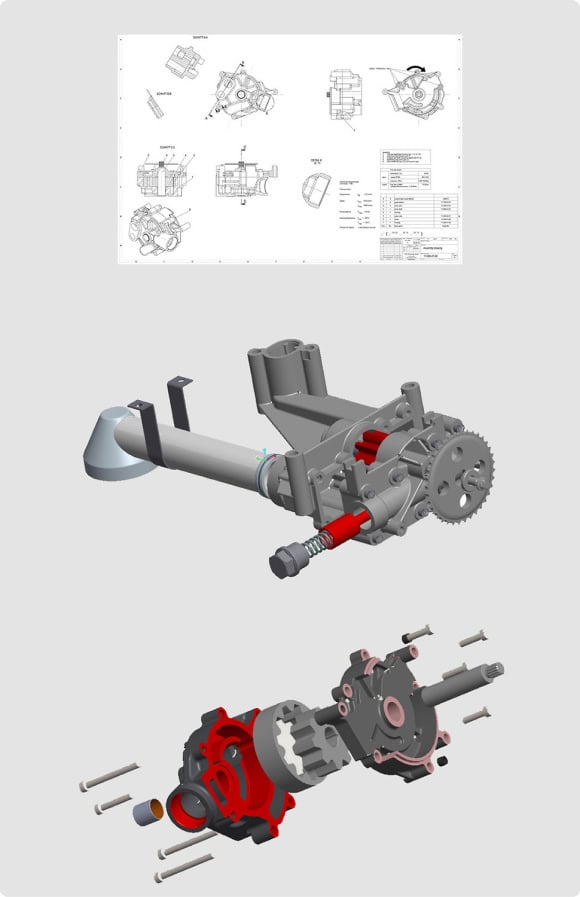
development process
1

Requirements

Kick-off & application review

Output:

Requirement specification + application targets

2

Concept

System layout & gear set design

Output:

3D design + initial drawings

3

Simulation

Hydraulic calculations & CFD

Output:

Hydraulic performance data + simulation results

4

Prototyping

Prototype manufacturing

Output:

Functional prototypes for test bench validation

5

Validation

Prototype test rig optimization

Output:

Validated pump system ready for production preparation

Series

Ramp-up with production partners

Output:

Series-ready production setup with established partners

Validated Quality

Every prototype is optimized on our prototype test rig for hydraulic response, clutch cooling flow, low pressure pulsation, low noise behavior, and reliable lubrication. DCT oil pump prototypes are typically available within 3–4 months after design freeze and are 100% tested with full test reports.

Prototype test rig optimization
100% tested with test reports
Typical prototype lead time: 3–4 months after design freeze

FAQs

Quick answers to practical engineering questions about DCT oil pump development, clutch actuation, cooling flow, pressure response, NVH, and compact drivetrain integration.

Typical challenges include rapid pressure build-up, stable clutch actuation, sufficient cooling flow for wet clutches, low pressure pulsation, compact packaging, and reliable lubrication during highly dynamic shift events.

Yes. TPV can develop pump concepts around cooling oil demand, thermal load cases, lubrication paths, suction conditions, and pressure targets to support wet clutch operation under demanding duty cycles.

Often, yes. TPV can evaluate the available envelope, gear set, suction path, leakage gaps, pressure response, and cooling flow to identify improvements without redesigning the full transmission housing.

Useful inputs include clutch actuation pressure targets, cooling flow demand, speed range, oil temperature range, transmission layout, suction path, packaging envelope, drive interface, and NVH or pulsation limits.

Prototype systems can be tested for pressure build-up, flow delivery, clutch cooling supply, pulsation, NVH behavior, leakage, power consumption, and relief valve response before series preparation.

Ideally before the pump envelope, cooling strategy, suction path, and hydraulic interfaces are frozen. Early involvement helps optimize pressure response, cooling flow, packaging, and manufacturability.

Back To Top