
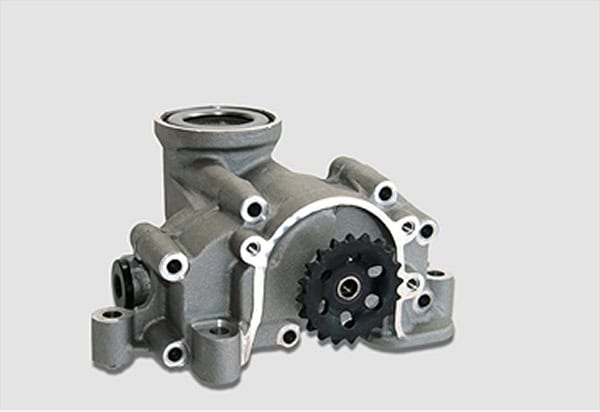


Typical applications for conventional oil pumps
Where TPV engineering delivers robust fixed-displacement pump designs.


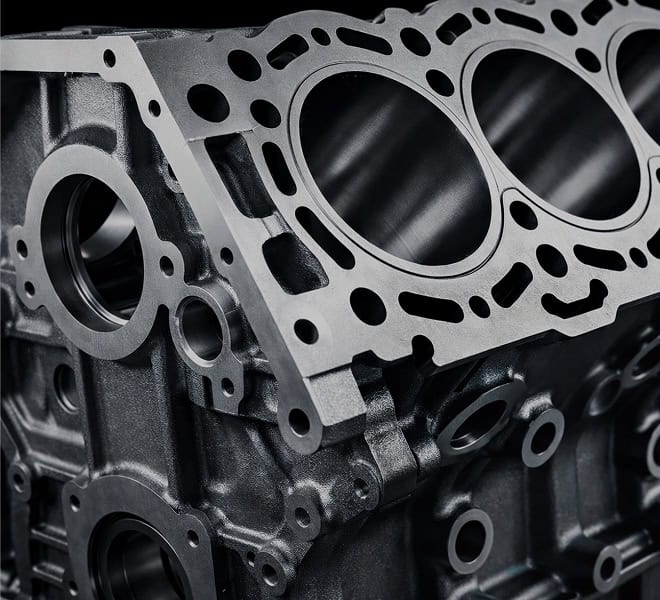
Seamless Integration Options
We adapt the pump housing and drive interface to your engine block, not the other way around.


Why choose Conventional?
Variable flow pumps are increasingly common, but fixed displacement designs remain a strong choice when robustness, packaging, and cost efficiency are the priority.


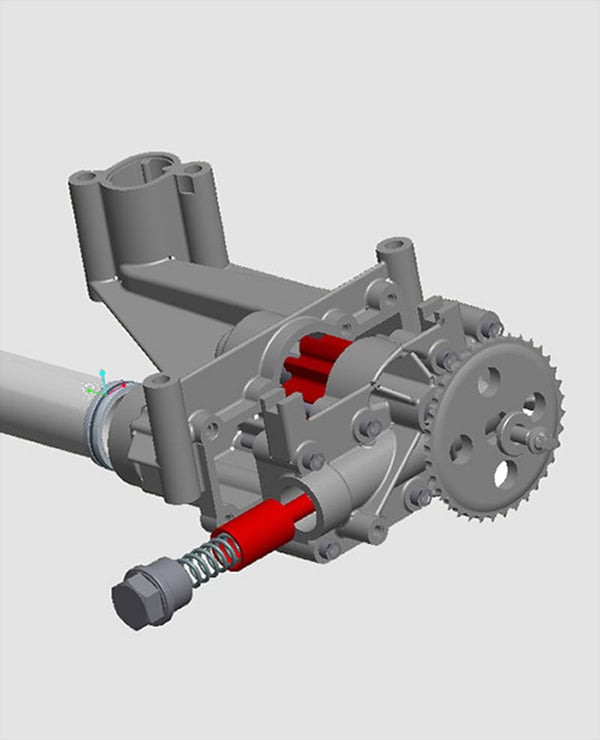
Key Performance Targets for Oil Pump Systems


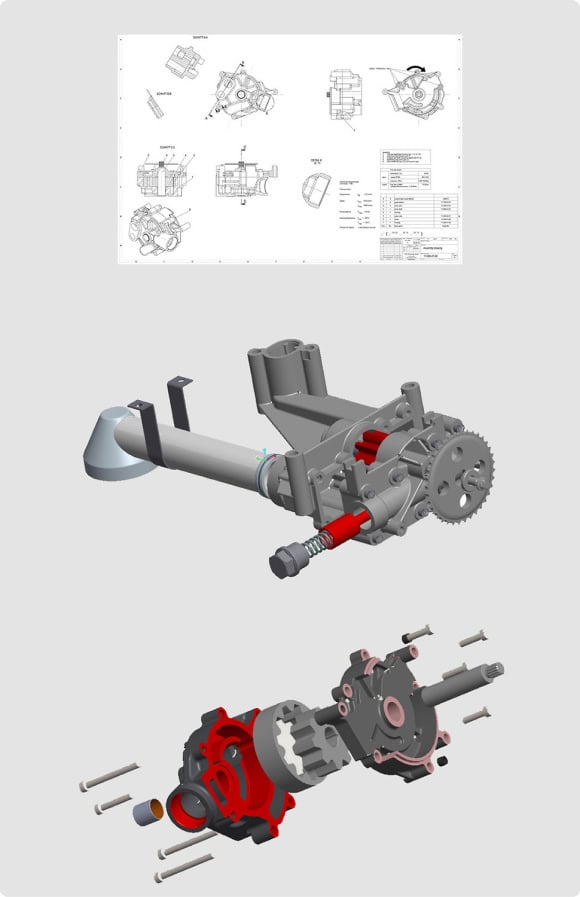
From requirements to validated prototypes
A clear workflow tailored to your application, covering concept development, simulation, prototyping, validation testing, and series ramp-up with production partners.
Requirements
Kick-off & application review
Requirement specification + application targets
Concept
System layout & gear set design
3D design + initial drawings
Simulation
Hydraulic calculations & CFD
Hydraulic performance data + simulation results
Prototyping
Prototype manufacturing
Functional prototypes for test bench validation
Validation
Prototype test rig optimization
Validated pump system ready for production preparation
Series
Ramp-up with production partners
Series-ready production setup with established partners
Validated Quality
Every prototype is optimized on our prototype test rig for low power consumption, low pressure pulsation, and low noise behavior. Conventional oil pump prototypes are typically available within 3–4 months after design freeze and are 100% tested with full test reports.
FAQs
Quick answers to common questions about oil pump custom development, timelines, validation, and how we support series ramp-up through production partners.
A conventional oil pump is suitable when the application requires a robust, proven and cost-efficient lubrication solution without complex control mechanisms. It is often the right choice for systems with stable operating conditions, clear packaging limits and high durability requirements.
Conventional oil pumps are usually designed for reliable oil supply across the full operating range. This can lead to overdelivery in certain conditions, which increases power consumption. The main engineering challenge is to balance safety margins with efficiency, noise behavior and packaging constraints.
Yes. Even without variable control, power consumption can be improved through optimized gear geometry, reduced internal leakage, better housing integration, lower friction losses and precise matching of flow and pressure targets to the real lubrication demand.
No. Conventional oil pumps are still relevant in modern engines and transmissions when the technical and economic requirements favor a simple, durable and validated pump concept. The decision depends on the application, not on the age of the technology.
The pump must deliver stable lubrication under different speeds, temperatures, oil viscosities and load conditions. At the same time, it has to fit into limited installation space, meet durability targets, control pulsation and noise, and remain suitable for series production.
Yes. TPV can develop conventional oil pump concepts around existing shaft positions, housing interfaces and packaging spaces. The goal is a mechanically robust, hydraulically efficient and production-ready pump design within the given system constraints.